

In the Japanese Akiya (vacant houses) market, most international investors and aspiring residents focus on how cheaply they can buy or how beautifully they can renovate. However, while stories of acquisitions and restorations are everywhere, the most critical question is rarely discussed: “How will you sell it?”
In a society facing significant population decline, the success of an Akiya investment is determined not by the “entry” price, but by the strength of the “exit” strategy. We take a deep dive into what a strategic Akiya investment looks like when looking 20 years into Japan’s future.
1. Identifying the “Buyer of the Future” Based on Demographics
Who will be buying houses in Japan 20 years from now? Based on statistical data, three specific groups emerge as the most likely candidates:
- Dual-Life Residents: High-net-worth individuals and tech professionals fleeing urban density to spend weekends or specific seasons in the countryside.
- Inbound & Digital Nomads: International residents who love Japanese culture and nature, seeking medium-to-long-term stays.
- Active Seniors: Retirees selling their city apartments to move to rural areas that offer a balance between nature and essential services.
Key Point: Do not plan on selling to “local youth.” The young population in rural areas is steadily decreasing. Your target should always be “inbound migration” from outside the local community.
2. Conditions for High “Resale Value”
Areas that will maintain or increase their value 20 years from now share common characteristics:
① Areas within “Compact City” Zones
The Japanese government is currently implementing “Location Optimization Plans” to consolidate residential areas. Properties outside these designated zones risk losing access to essential infrastructure (water, waste management, etc.) in the future.
② Regions with Established “Brand Value”
- Greater Kyoto (Otsu, Kameoka, etc.): As prices in central Kyoto become prohibitive, demand remains steady for areas that retain a traditional atmosphere within a 30-minute commute to the city.
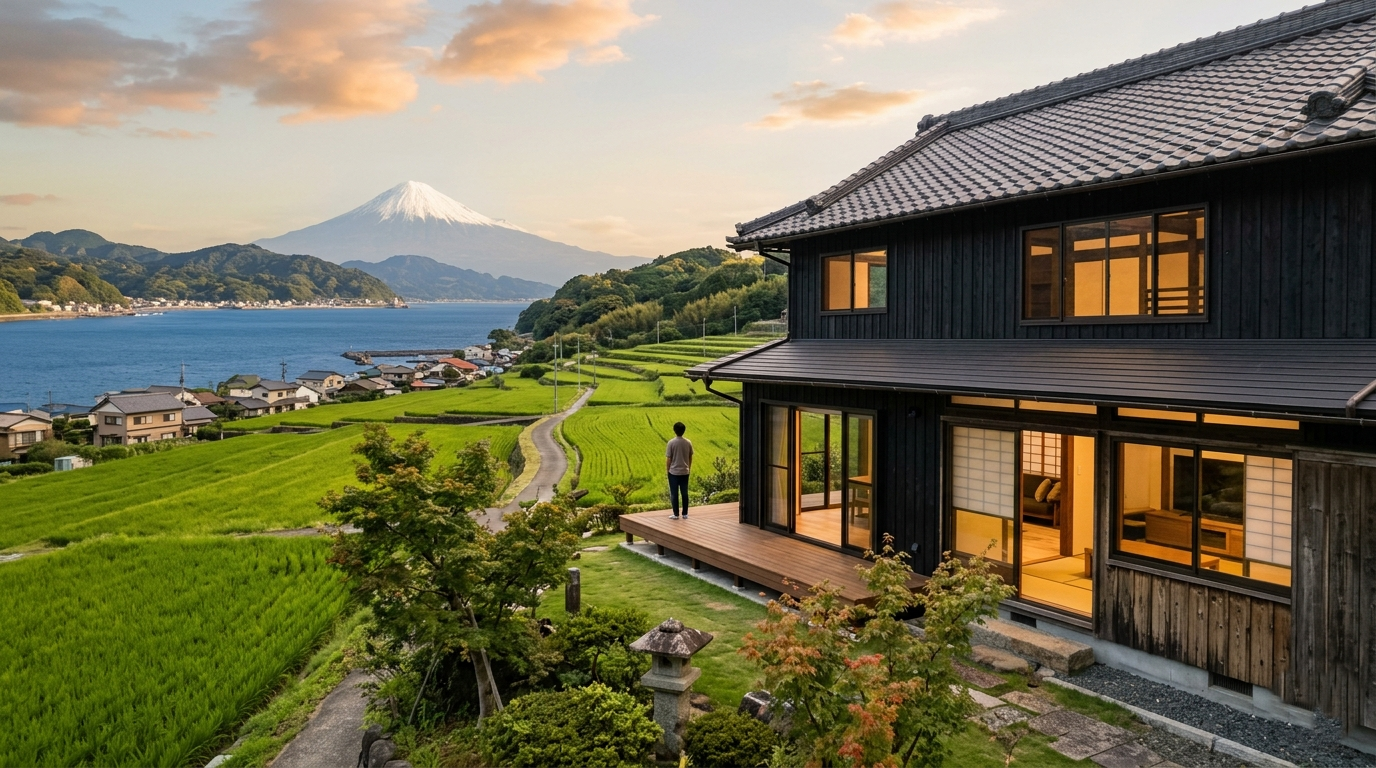
- Shizuoka Coastal Areas (Atami, Ito, Shimoda): These regions offer “permanent assets” like hot springs and the ocean with easy access from Tokyo. Resort demand is the least affected by population decline.
- Nagano (Karuizawa, Miyota): These have become hubs for digital nomads and educational migration (international schools), making them some of the easiest areas for an exit strategy.
3. Selecting Property to Avoid a “Negative Asset”
To secure your exit strategy, you must employ these technical tactics during the purchase phase:
- Boundary Confirmation (Kyokai): Boundaries of old Japanese houses are often ambiguous. To avoid legal hurdles during resale, ensure a “Final Survey” (Kakutei Sokuryo) is completed or feasible at the time of purchase.
- Avoid Non-Rebuildable Properties: Houses that do not meet modern road-access requirements (Saikenchiku-fuka) cannot secure mortgages 20 years from now. This drastically limits your pool of buyers.
- Consider “Downsizing” (Genchiku): Oversized houses have high maintenance costs and are often rejected by modern, smaller families. Strategically reducing the floor plan during renovation can actually increase resale value.
4. Advice for Investors: Choose with “Data and Maps,” Not Emotions
Buying a house simply because “the traditional atmosphere is lovely” is a risky move.
- Check Municipal Finances: Ensure the local municipality isn’t at risk of financial collapse.
- Review Hazard Maps: If a property is in a high-risk zone for landslides or flooding, insurance premiums will skyrocket in 20 years, making a sale nearly impossible.
Conclusion: An Investment Without an Exit is Just a “Donation”
When done correctly, Akiya investment in Japan offers both excellent returns and social contribution. However, an investment made without considering the sale (exit) phase may result in leaving a “negative legacy” for yourself or your heirs.
“Twenty years from now, who will be willing to pay for the view from this window?”
If you cannot provide a clear answer to that question, the wisest move for an investor is to walk away.