

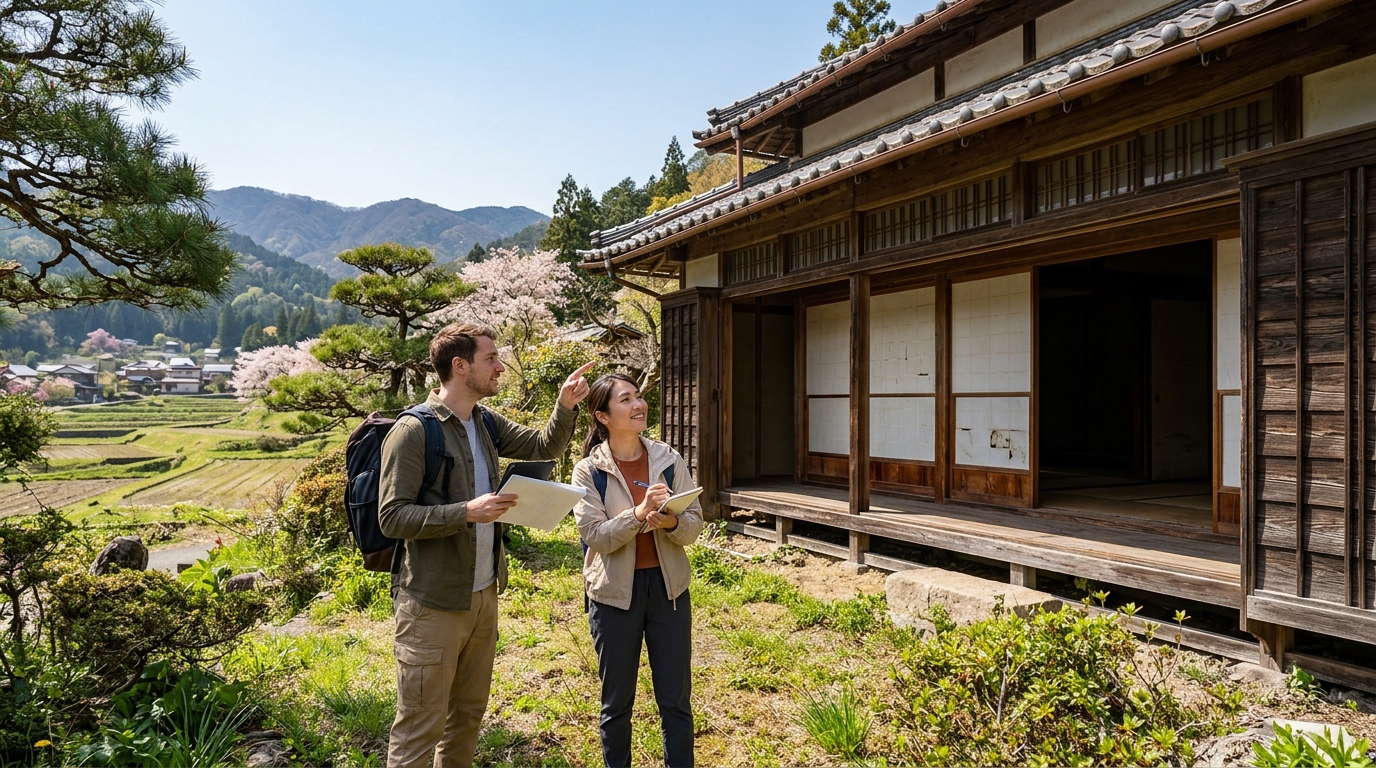
In recent years, driven by a surge in rural revitalisation, relocation trends, and the ongoing depreciation of the yen, investors and lifestyle-seeking buyers worldwide have turned their attention toward Japan’s vacant houses (“Akiya”). The prospect of acquiring a detached house for an extraordinarily low price—ranging from a few thousand to tens of thousands of dollars—can easily look like a true “Japan Dream.”
However, acquiring and managing property in rural Japan from overseas as a foreign national comes with unique legal frameworks and substantial operational hurdles.
In this guide, Anihon Akiya Japan breaks down the practical challenges regarding visas, financing, and power of attorney for international buyers and foreign investors, alongside the five critical traps you must avoid.
1. Can Foreigners Buy Akiya in Japan? (Understanding the Core Rules)
First and foremost: Under Japanese law, there are no restrictions on acquiring real estate ownership based on foreign nationality or non-resident status. Regardless of citizenship, foreign buyers can hold full freehold ownership (Shoyūken), whether the property is intended for personal residence, investment, a holiday home, or long-term holding.
However, “being legally allowed to buy” and “smoothly owning and managing a property” are two entirely different matters. Let us examine the three major operational barriers foreign buyers face.
2. The 3 Major Hurdles for Foreign Akiya Buyers
① Visas (Residency Status) vs. Property Ownership: A Common Misconception
One of the most widespread misunderstandings is that buying real estate in Japan automatically grants the right to live in the country.
- The Reality: Japan does not offer a “Golden Visa” program that grants residency simply in exchange for real estate investment. Property ownership and visa status are completely separate legal matters. To reside in Japan long-term and manage your property, you must independently qualify for an appropriate visa (such as a Business Manager, Work, or Digital Nomad visa).
② The Loan Barrier: Obtaining Financing from Japanese Banks is Extremely Difficult
Even for low-cost properties priced under a few million yen, obtaining a mortgage or property-backed loan from a Japanese financial institution as a non-resident foreign buyer is virtually impossible.
- The Reality: Most Japanese commercial and regional banks require a proven tax history in Japan, permanent residency (Eijūken), or a long-term work visa as prerequisites for lending. As a result, the vast majority of overseas buyers must complete transactions via all-cash purchases.
③ Power of Attorney, Judicial Scriveners, and Strict FEFTA Compliance
Completing a real estate transaction without physically residing in Japan (or without fluent Japanese proficiency) requires navigating specific legal procedures:
- The Necessity of a Judicial Scrivener (Shihō-Shoshi): Property registration in Japan is executed at closing by a licensed Judicial Scrivener. This step cannot be bypassed.
- Power of Attorney (POA): If you cannot attend the closing in person, you will need a notarized Power of Attorney along with a signature certificate (Shunsigned-Shōmei) issued by a Japanese embassy/consulate or a public notary in your home country.
- Post-Acquisition Reporting Under FEFTA: Under the Foreign Exchange and Foreign Trade Act (FEFTA), non-resident buyers who acquire real estate in Japan are generally required to file a report with the Minister of Finance via the Bank of Japan within 20 days of acquisition (certain exemptions apply for personal residential use, but caution is advised for investment purposes).
3. Is the “Japan Dream” Real? 5 Traps Foreigners Fall Into When Buying Rural Properties
Below are the five critical traps that international buyers frequently overlook when entering the rural Akiya market.
Trap 1: Blindsided by Low Sticker Prices and Crying Over Millions in “Hidden Renovation Costs”
- The Reality: Properties listed for $1,000 or even “0 Yen” have underlying reasons for their pricing. Houses constructed before the 1981 building code revision (old seismic standards) often require extensive structural retrofitting. Add roof leaks, termite damage, deteriorated plumbing, and a complete lack of insulation, and it is not uncommon to encounter a scenario where a $3,000 house demands $50,000 in renovation costs.
Trap 2: The Legal Pitfall: “Unrebuildable Properties” (Sai-kenchiku Fuka) and Road Access Requirements
- The Reality: Japan’s Building Standards Act dictates that a plot of land must adjoin a public road at least 4 meters wide by at least 2 meters of frontage to allow new construction. Many old Akiya in rural areas do not meet this road access requirement (Sesshō-Gimu). If such a house burns down or is demolished, local authorities will strictly prohibit rebuilding, turning your investment into an unsellable liability (Fudōsan / “Negative Asset”).
Trap 3: The Agricultural Land Barrier: The “Agricultural Committee” (Nōgyō Iinkai)
- The Reality: Countryside Akiya and traditional Kominka properties frequently come bundled with adjacent farmland (Nōchi). Under Japan’s Agricultural Land Act, acquiring farmland is restricted exclusively to individuals certified by the local Agricultural Committee. Foreign buyers hoping to simply grow a small vegetable garden often find their purchase halted at this regulatory hurdle.
Trap 4: Complex Ownership Rights & Unregistered Inheritances
- The Reality: Rooted at the heart of Japan’s vacant house crisis are properties left with unregistered inheritances (Sōzoku Mitsōroku) across multiple generations. When attempting to buy, you may discover dozens of legal heirs who cannot agree on a sale or cannot even be located. Trying to negotiate directly without a licensed Japanese real estate agent (Takuchi Tatemono Torihikishi) exposes you to severe legal gridlock.
Trap 5: Post-Purchase Neglect: Taxes, Management, and Local Communication
- The Reality: Buying the house is only the beginning. Neglecting the property leads to serious consequences:
- Fixed Asset & City Planning Taxes: Payable annually simply for owning the property.
- Tax Representative (Nōzei Kanri-nin): Non-resident property owners are legally required to appoint a domestic tax representative to manage tax filings and payments within Japan.
- Community Relations & Local Liabilities: Overgrown weeds, pest infestations, roof tiles blown off during typhoons, or heavy snow buildup can cause severe friction with neighbors. If local authorities designate the property as a “Designated Vacant House” (Tokutei Akiya), fixed asset taxes can jump up to 6x, and you may face structural remediation orders or legal liability for damages.
Conclusion: How to Buy Japanese Akiya Wisely
Acquiring an Akiya in Japan as a foreign buyer is entirely achievable. Transforming a vintage property into a tranquil getaway or pursuing a sustainable rural lifestyle remains a very realistic dream.
However, the key to success lies in building a team of trusted professionals (bilingual real estate agents, judicial scriveners, and tax accountants) while deeply understanding the local laws and risks. Do not let low price tags cloud your judgment. Conduct comprehensive on-site inspections (or remote tours via reliable local agents), verify all legal and structural parameters, and prepare yourself for a secure and satisfying “Akiya” journey. We are always here to make all these processes easy and secure for you. For more information and support, please contact us.
ASUMOTO KOGYO LLC.(Anihon Akiya Japan)