
1. The Inseparable Bond Between Municipalities and Neighborhood Associations (Jichikai): The Voice of the Locals
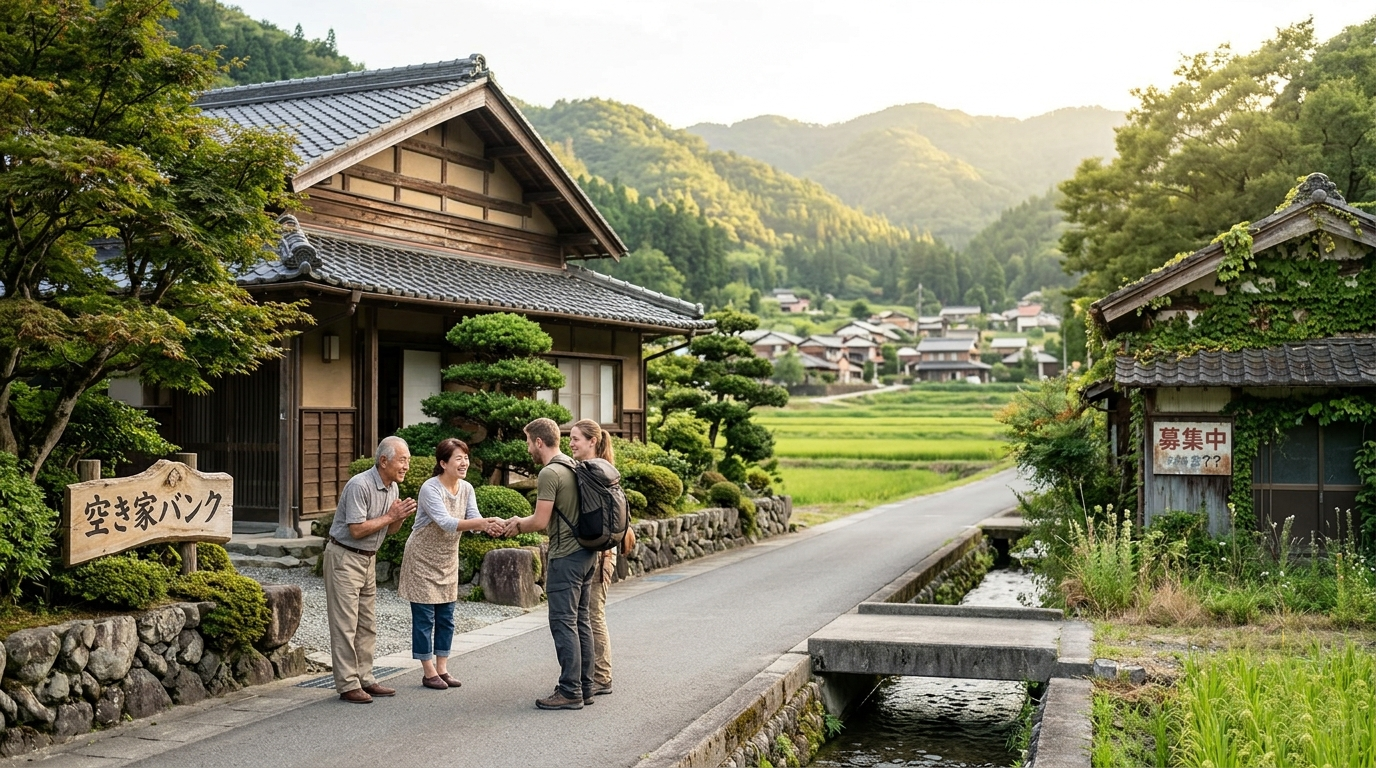
While local municipalities officially run the Akiya Bank system, the entity that actually maintains and manages the neighborhood or village where the property is located is the community itself—specifically, the “Chonai-kai” (Neighborhood Association) or “Jichikai” (Village Committee) formed by the residents.
In Japan, local governments value harmony with these neighborhood associations above all else. This is because it is impossible for official government staff alone to manage all the infrastructure, public safety, environmental cleanliness, and waste management of rapidly depopulating rural areas.
Imagine a foreigner who does not know the language or culture suddenly joining this community and ignoring local rules (monthly collective weeding, rotating neighborhood duties, strict garbage segregation rules, etc.). When this happens, complaint calls from the neighborhood chief begin to flood the municipality. For a municipal official, the biggest nightmare is not “failing to sell an empty house,” but rather “ruining the relationship of peace and trust with the local residents who have lived there for decades due to this sale.”
2. Welcomed Profiles vs. Distanced Profiles: The “Hidden Priorities” Not Listed in Ads
Many municipalities do not want to just “get rid of a house” through the Akiya Bank; their main goal is the “revitalization and long-term preservation of the region.” Therefore, there is a clear (but never officially admitted) order of priority based on the buyer’s profile.
The Most Celebrated Profile: Families with Children
The biggest fear of rural areas is turning into a “ghost village” (Genkai Shuraku) and the closure of local schools due to a lack of students. Even a single family with children moving to the area directly affects vital issues, such as whether the local elementary school can remain open. Therefore, families with young children are welcomed with open arms by both the municipality and the neighborhood association, and they are often offered extra relocation and renovation subsidies (incentive bonuses).
Distanced Profiles: Single Foreigners and Commercial Investors
On the flip side, the following profiles are usually met with suspicion and caution:
- Seasonal/Vacation Use: People who buy the house and visit only a few times a year cannot participate in the community’s collective chores, such as kusamushiri (草むしり – communal weeding). This fails to lighten the neighborhood’s burden.
- Minshuku (Airbnb/Guesthouse) Purposes: The constant influx of unknown foreign tourists into the neighborhood creates safety and noise concerns, drawing heavy backlash, especially in villages with an elderly population.
- Overseas-Based and Unreachable Buyers: If communication is lost with a foreign owner after the house is purchased, or if the house deteriorates further and poses a risk of collapse, it is extremely difficult to reach or take legal action against someone abroad under Japanese law. Municipalities strictly avoid taking this risk.
3. The Invisible Interview by the “Chonai-kai” (Neighborhood Association)
Some modern or urgently solution-seeking municipalities explicitly add a clause to their Akiya Bank terms of use: “An advance interview with the local neighborhood association chief is mandatory before purchasing the house.”
This is, in fact, an informal “oral exam.” In this interview, no one looks at the money in your bank account. Instead, they look for answers to the following questions:
- “Can this person communicate in Japanese at a basic level?”
- “Are they willing to participate in communal neighborhood events (festivals, cleanup days)?”
- “Do they understand the ‘mutual neighborly relations’ unique to Japanese rural culture (the rules required to avoid Mura-Hachibu, or social ostracization)?”
If it is felt that you cannot meet these criteria, even if the house still appears as “for sale” in the system, you will be politely shown the door with a bureaucratic excuse like, “We are currently in discussions with another buyer for this property.”
Breaking Through the Invisible Walls: 4 Strategies for Foreigners to Gain Trust
So, how can an investor or expat candidate from abroad overcome these rigid walls of Japanese rural society? Here are some concrete approaches practiced by those who succeed:
Strategy 1: Emphasize Your Intent to “Contribute to the Community” in First Contact
Simply telling the municipality, “I’m looking for a cheap and spacious house,” is a major mistake. Right from the first email or phone call, clarify your vision as follows:
- “I have deep respect for traditional Japanese architecture (Kominka) and want to restore the house in accordance with its original form.”
- “After moving in, I want to take an active role in neighborhood cleanups, local festivals, and volunteer work.”
- “If appropriate, I would love to support the local youth or regional development with my professional skills (English teaching, software, digital content, etc.).”
Strategy 2: Find a Japanese “Guarantor” or a Reliable Local Representative
To eliminate the risk of “communication breakdown”—the municipalities’ biggest fear—appoint a trusted friend residing in Japan, a business partner, or a professional consultant/real estate agent specializing in empty house revitalization as your representative. Giving official authorities the assurance that “if a problem arises, this representative in Japan will intervene immediately” is a powerful passport that will open even the most tightly closed doors.
Strategy 3: Bridge the Language Barrier with “Sincerity”
You don’t have to speak flawless Japanese. Even if you use a translator, express in your own words (perhaps with a sincere letter you write or a short video message you shoot) “why you specifically want to live in this town.” This effort is highly valued by elderly property owners and village chiefs in Japanese rural society. Making them say, “This person will take care of our house like the apple of their eye,” is the most important emotional key to closing the deal in Japan.
Strategy 4: Look Beyond Akiya Banks and Turn to “Private Real Estate Agents”
If the bureaucratic pace of municipalities and their distant stance toward foreigners have exhausted you, switching to “private empty house platforms” or “private real estate companies specializing in Kominka renovation” is a smart step. The relationship between the houses in private companies’ portfolios and the neighborhood is usually resolved beforehand, and the title transfer processes are legally prepared, saving you serious time and stress.
Conclusion: The Key Word is Not “Buying Property,” It’s “Joining a Community”
Buying a house through the Akiya Bank system in Japan does not mean merely taking over a physical piece of real estate consisting of a pile of concrete and wood. It means “taking over a part of the history, culture, and network of human relations (the community) that that land has meticulously woven over hundreds of years.”
The cautious approach of municipalities toward foreigners is not racism or discrimination; it is a mechanism of “self-defense” to protect their own local order.
When you understand this structure and approach the system not like a “paying customer” but as a “new neighbor who will keep the neighborhood culture alive,” you won’t believe how warmly and genuinely those closed rural doors will open for you.