
Introduction
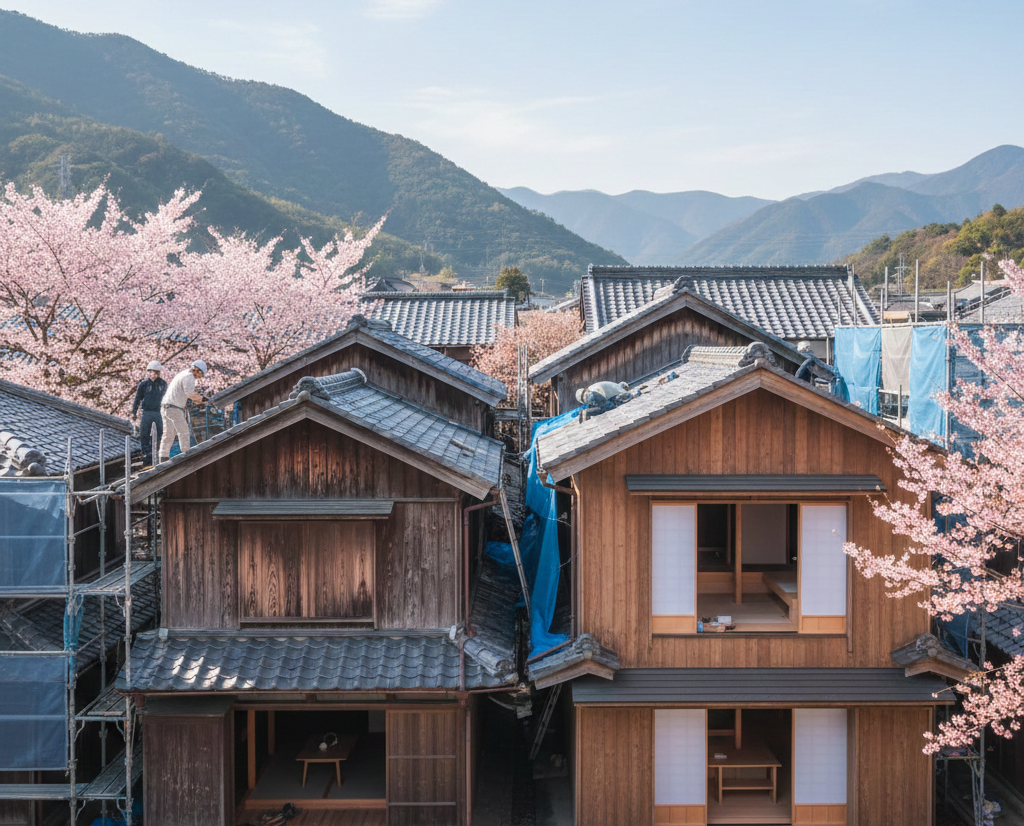
The “Akiya” phenomenon is no longer just a demographic curiosity; it’s a goldmine for those looking to create a dream home or a boutique guesthouse in the Japanese countryside. However, the true cost of an Akiya isn’t the purchase price—it’s the renovation. To combat the housing crisis, the Japanese government (MLIT) and local municipalities offer substantial non-repayable grants.
Key Subsidy Categories
1. Municipal Renovation Grants (空き家改修事業補助金) Most local governments offer direct subsidies for renovating properties listed in their “Akiya Banks.”
- Coverage: Typically 1/3 to 2/3 of total renovation costs.
- Cap: Ranges from ¥500,000 to ¥2,000,000 depending on the region.
- Bonus: Cities often offer extra incentives if you are moving with children (Child-Rearing Support) or relocating from Tokyo.
2. Energy Efficiency & Green Housing (ZEH Standards) The Japanese government is pushing for a carbon-neutral society. Programs like the “Advanced Window Renovation 2026” provide massive rebates for upgrading insulation.
- Insulation: Up to ¥2,000,000 for high-performance windows and doors.
- Equipment: Subsidies for high-efficiency water heaters and solar panels.
3. Seismic Retrofitting (耐震改修工事) Many Akiya were built before the 1981 building code update.
- Support: Governments often provide free seismic diagnostic tests and grants up to ¥1,000,000 to make the structure earthquake-resistant.
Eligibility & Critical Rules
- The “Local Contractor” Rule: Almost all subsidies require you to hire a construction company registered in that specific municipality.
- Apply BEFORE You Start: This is the golden rule. If you sign the contract or start the work before the subsidy is approved, you lose the eligibility.
- Akiya Bank Registration: The property must usually be officially registered in the local government’s vacant house database.
Conclusion
Renovating an Akiya is a marathon, not a sprint. By leveraging these grants, you can offset nearly 30-50% of your initial costs.