
Buying an “Akiya” (abandoned house) is an attractive option for many. Especially for foreigners dreaming of moving to Japan or those looking for an affordable vacation home, properties sold for a few hundred thousand yen—or even “0 Yen”—can seem like a gold mine.
However, in the world of real estate, there is no such thing as a “free lunch.” These seemingly dirt-cheap houses hide “unseen costs” that will weigh heavily on you after the purchase. In this article, we detail the taxes and maintenance expenses that are not listed on “Akiya Bank” websites.
The Reality of Hidden Costs in Akiya Purchases
The costs associated with buying an Akiya are generally divided into three main phases: “Acquisition,” “Maintenance and Management,” and “Renovation.”
1. Initial Costs During Property Acquisition
Even if the property price is 0 Yen, you must pay for legal procedures.
- Registration and License Tax (Transfer of Ownership): This is a tax paid to the state to transfer the title into your name. Even for old buildings, if the land value is high, this amount can be significant.
- Stamp Duty: A formal tax paid via revenue stamps attached to the sales contract.
- Judicial Scrivener (Shiho-shoshi) Fees: The cost of hiring a professional to handle the registration paperwork. Additionally, if boundary demarcation (defining the exact limits of the land) is required, surveying costs will be added.
- Real Estate Acquisition Tax: A tax issued by the prefectural government several months after the purchase. One should not assume that a low purchase price exempts them; an unexpected bill may arrive based on the property’s appraised value.
- Brokerage Commission: If a real estate agent is involved, a commission is paid within legal limits. For low-cost houses, agents may charge a special fee (up to 180,000 Yen + tax) to cover their labor for “low-value Akiya” transactions.
2. Annual Maintenance and Management Costs
Owning an Akiya costs money just to keep it in your possession.
- Fixed Asset Tax and City Planning Tax: The most critical point here is the “Special Akiya” designation. If a house is left unmaintained and designated as a “Special Akiya” by the government, the tax reduction benefits (which can reduce tax by up to 1/6th) are revoked, and your taxes can jump up to 6 times higher.
- Fire and Earthquake Insurance: Old wooden houses are considered high-risk, so insurance premiums can be expensive, or some companies may refuse to provide coverage altogether.
- Fixed Utility Charges: Even if you don’t use electricity, water, or gas, you pay a monthly base fee to keep the systems active. This is a vital expense in regions where water must be kept running in winter to prevent pipes from freezing.
- Management Service Fees: If you live far away, you may need to pay a management company to ventilate the house and mow the grass.
3. Renovation and Clearing “Liabilities”
This is where the budget often expands the most.
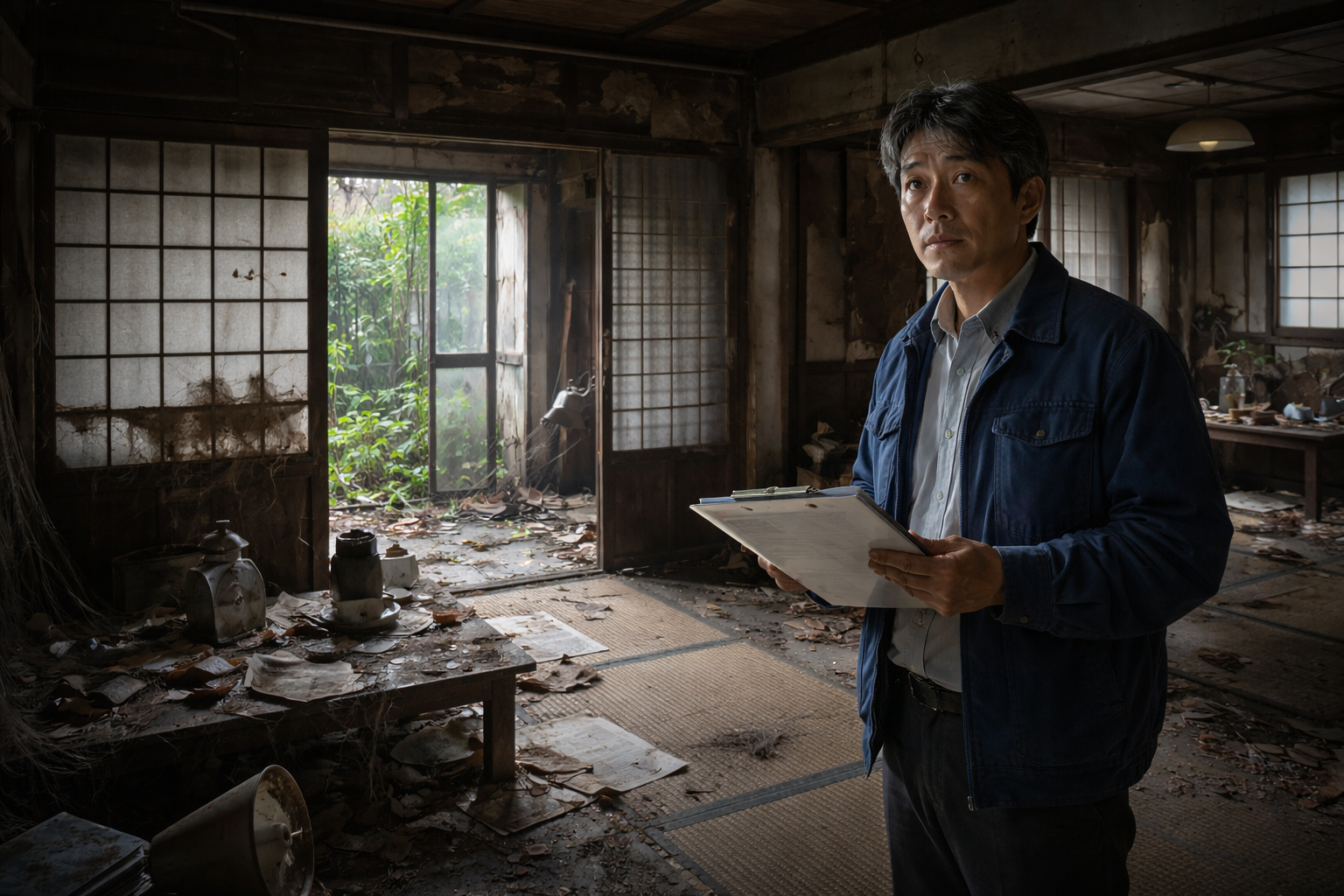
- Residual Waste Removal: Most Akiyas in Japan are left with the previous owner’s furniture, clothes, and even family altars (Butsudan). Disposing of these as industrial waste can cost between 300,000 and 1,000,000 Yen depending on the size of the house.
- Infrastructure Upgrades (Sewage and Gas): Many old rural houses use “vault toilets” (pit latrines) or old septic systems. Connecting these to the public sewer system or installing modern purification tanks can cost millions of Yen.
- Termites, Roof Leaks, and Seismic Reinforcement: A house may look fine from the outside, but the foundations might be eaten by termites or the attic might be rotting. It is impossible to live in the house without these repairs, and comprehensive restoration can cost tens of millions of Yen.
The “Akiya Checklist” to Avoid Failure
Before purchasing, be sure to check these 3 points:
- Are the Boundaries Confirmed?: Boundary disputes with neighbors can make it impossible to sell the house in the future.
- Is it a “Non-Rebuildable” Property?: Due to changes in building codes, there are plots where a house cannot be rebuilt once the current one is demolished. This means the land value is essentially zero.
- Are There Local Government Subsidies?: Many municipalities offer grants for renovating Akiyas or removing leftover belongings.
Conclusion: An Akiya is Not “Bought,” It is “Raised”
Investing in an Akiya is not just a saving strategy; it is taking over a piece of Japanese history and bringing it back to life. The key to success is not being misled by the “0 Yen” figure and incorporating these hidden costs into your budget from the start.