
Did you know that in Japan, an area larger than the island of Kyushu (approx. 36,700 $km^2$) is legally ownerless? This staggering figure represents nearly 20% of Japan’s total landmass.
In this blog post, we dive into the “forbidden room” of the real estate industry: the crisis of owner-unknown land, and the shadowy world of “legacy hunters” who navigate the labyrinths of property registries.
1. Why Has Japanese Land Lost Its “Owners”?
The primary catalyst for land losing its legal identity in Japan is the “Neglect of Inheritance Registration.”
Until recently, updating the property registry upon inheriting land from a parent was not a legal requirement. For low-value land in rural areas, many chose to skip the name transfer to avoid registration fees and the burden of future fixed asset taxes.
The result? Property titles stuck in the names of ancestors from the Meiji or Taisho eras (over 100 years ago). Today, these registries have spiraled into “administrative nightmares” where the number of legal heirs for a single plot can exceed 100 people.
2. “Land Detectives”: The Resolve of the Judicial Scriveners (Shiho Shoshi)
Unearthing the truth from this “registry graveyard” falls to the Judicial Scriveners, Japan’s legal registration specialists. Their work has evolved from mere paperwork into something akin to “historians” or “private investigators.”
Their “Land-Tracing” Techniques:
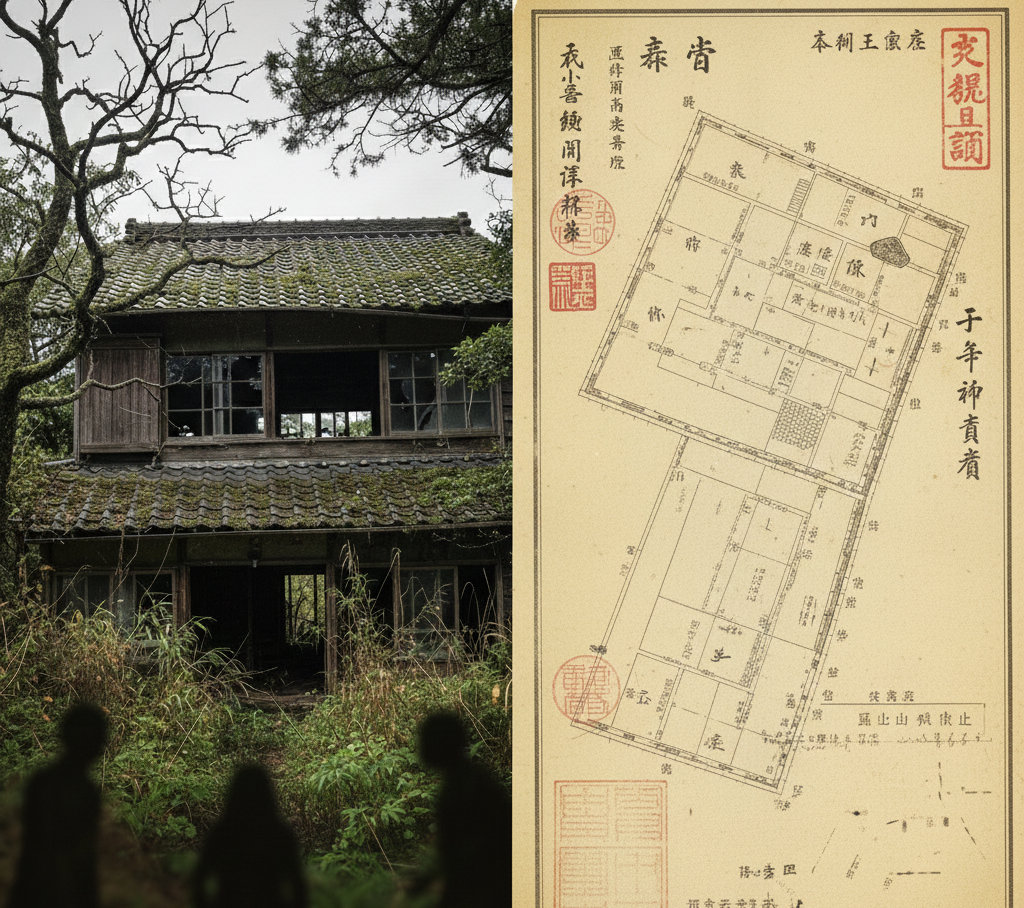
- Decoding Old Records: They trace back from modern family registries to pre-war and Meiji-era records (Joseki Tohon). Deciphering the handwritten, archaic script in these documents requires high-level expertise.
- Expanding Family Trees: As the search deepens, heirs are often found scattered across Japan, and sometimes as far as Brazil or the United States.
- On-Site Infiltrations: When documents fail, they conduct interviews with elderly neighbors or enter abandoned homes to find clues—such as names on Buddhist tablets (Butsudan) or old letters—to track down descendants.
3. The 2024 Legal Reform: The Era of Accountability Begins
The Japanese government has finally taken drastic measures to address this crisis:
- Mandatory Inheritance Registration (Effective April 2024): Heirs are now legally required to register their inheritance within three years of discovery. Failure to do so can result in a fine of up to 100,000 Yen.
- The State Land Return System: A new pathway allows citizens to “return” unwanted land to the state. However, with high application fees and the requirement to pay 10 years of maintenance costs upfront, the barriers remain high.
4. A Warning to Akiya Investors
Before celebrating a “bargain” found in an Akiya bank or at a public auction, check the registry meticulously.
If the owner’s name is stuck in the “early Showa era” (the 1920s-30s), that house might be a “cursed asset.” Even if you convince one heir to sell, a single objection from any of the remaining 99 heirs can prevent you from renovating, demolishing, or reselling the property.
5. Conclusion: Land is a “Memory”
The “Owner-Unknown Land” issue in Japan is more than just an economic loss; it is a symbol of fraying family ties and the decline of local governance.
The next time you walk past a weathered, abandoned house, remember: behind those walls, the history of dozens of heirs lies dormant in a labyrinth called the property registry.