
How to Understand Bad Smells, Hygiene Risks, and Neighbor Complaints from Vacant Houses
Japan’s akiya problem is often discussed in terms of aging buildings, inheritance, earthquake resistance, renovation costs, and land use. However, there is one issue that is often overlooked, even though it can directly affect nearby residents and the surrounding community.
That issue is bad odor.
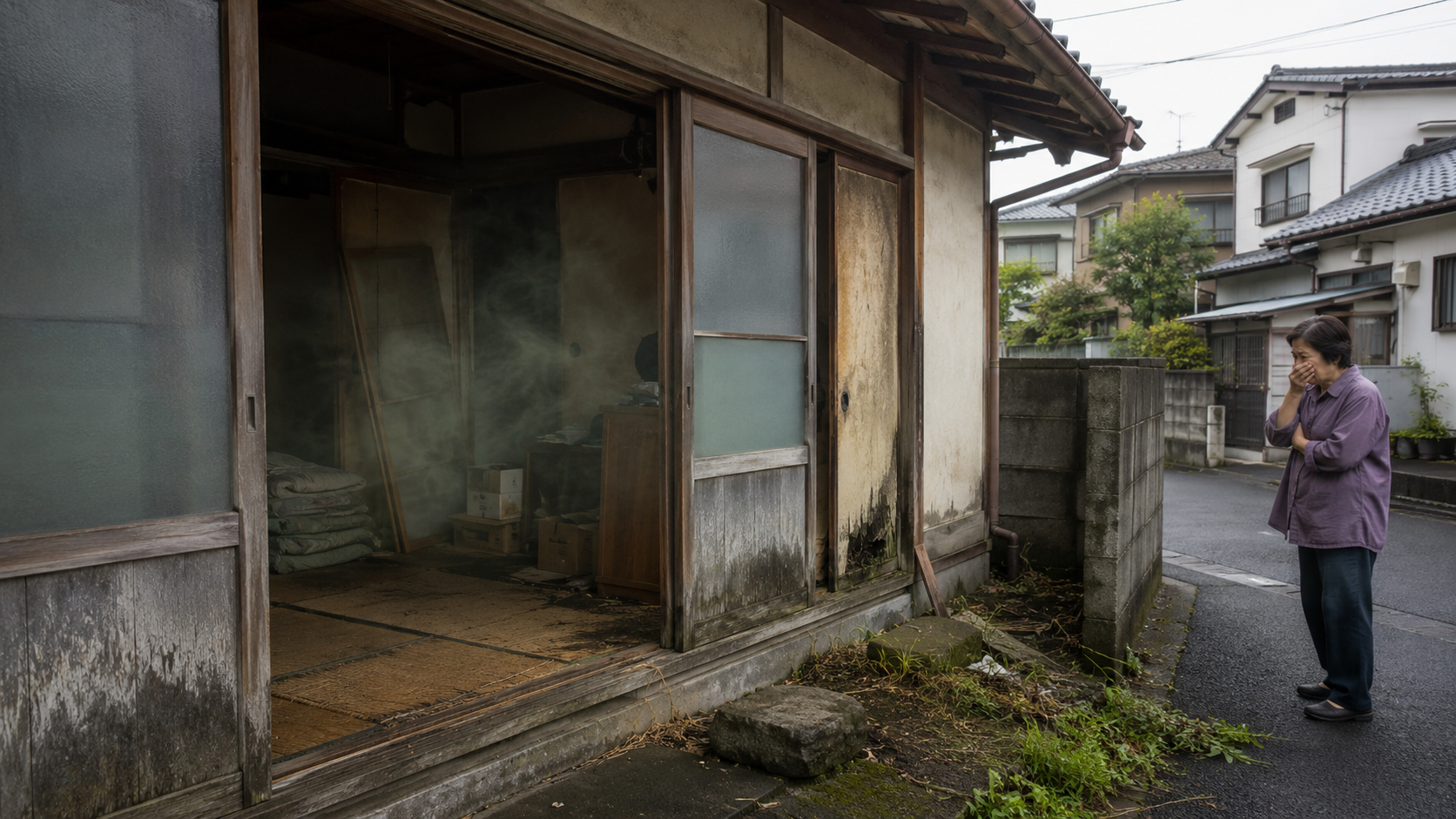
A vacant house may look quiet and harmless from the outside. But inside, strong odors may develop over time due to humidity, old furniture, leftover belongings, garbage, pet traces, mold, drainage problems, insects, rodents, or small animals entering the house.
These odors do not always stay inside the building. They can spread outside through broken windows, ventilation openings, gaps in the roof or walls, the garden, or drainage pipes, causing discomfort for neighbors.
For this reason, odor problems in akiya should not be seen only as cleaning issues. They are important risks related to hygiene, health, neighbor relations, property value, renovation costs, and possible complaints to local authorities.
Why Do Bad Odors Develop in Vacant Houses?
In houses where nobody lives, air circulation often stops. Windows remain closed for long periods, rooms are not ventilated, sunlight does not enter enough, and moisture builds up. Japan’s humid climate can make odor problems worse, especially in older wooden houses and homes with tatami rooms.
Common causes of bad odors in vacant houses include:
Air trapped for a long time.
Humidity and mold.
Decayed tatami or wood.
Old furniture, clothing, and futons.
Garbage or food left inside.
Pet urine, feces, hair, and odor traces.
Rodents, insects, birds, or small animals entering the house.
Dead animals.
Odors from drains or sewage.
Blocked drainage pipes.
Roof leaks and rainwater damage.
Unmaintained bathrooms, toilets, and kitchens.
Sometimes the source of the odor is visible, such as garbage bags, old food, or animal waste. In other cases, the source may be hidden under tatami, inside walls, under the floor, in the attic, inside closets, or inside drainage pipes.
Therefore, when dealing with odor in an akiya, surface cleaning alone is not enough. It is important to find the source of the smell.
Odor Can Affect Property Value
The value of an akiya is not determined only by land size, building area, or location. The first impression when entering the house is also very important. Bad odor is one of the strongest negative signals for potential buyers or tenants.
If someone opens the door and immediately smells mold, animals, garbage, decay, or sewage, they may feel that the house is unsafe, unhealthy, or likely to require expensive repairs.
Bad odor can cause several problems:
Reduced buyer interest.
Difficulty renting the property.
Higher renovation costs.
The property may be seen as problematic.
Complaints from neighbors.
Possible consultation with local authorities.
Negative impact on the local living environment.
In Japan, cleanliness, order, and harmony with neighbors are very important. For this reason, a vacant house that produces bad odor is not only the owner’s problem. It can become a community issue.
Pet Odors and Traces Left Behind
Some akiya were previously occupied by owners who kept pets for many years. Pets themselves are not the problem. The issue arises when urine, feces, hair, scratches, and odors have not been cleaned properly for a long time.
Tatami, wooden floors, lower walls, doors, curtains, closets, and carpets can absorb odors easily. Some smells, such as cat urine, are especially difficult to remove with surface cleaning alone. They may penetrate wood, flooring materials, or wall surfaces.
Important points to check include:
Are there stains or smells on tatami?
Are there urine marks in floor corners?
Are lower walls discolored?
Are there scratches around doors or windows?
Is there animal odor inside closets?
Is there a risk of fleas, ticks, or insects?
Was the house closed for a long time with pet traces inside?
In these cases, ordinary cleaning may not be enough. Disinfection, deodorization, tatami replacement, flooring replacement, or wall material replacement may be necessary.
Mold Smell and Moisture Risks
One of the most common odors in vacant houses is mold smell. This is usually caused by humidity, closed air, roof leaks, and poor ventilation.
Mold odor is often strong in places such as:
Tatami rooms.
Closets.
Bathrooms and washrooms.
Kitchen cabinets.
Attics.
Underfloor spaces.
Window areas.
North-facing rooms.
Rooms with poor sunlight.
Mold smell is not just unpleasant. It is a warning sign that the building may have a moisture problem. If the odor comes from inside walls or under the floor, air fresheners or surface cleaning will not solve the problem. The cause, such as roof leaks, lack of ventilation, or drainage problems, must be addressed.
Odors from Garbage and Leftover Belongings
Many vacant houses contain old furniture, clothing, futons, kitchen items, paper, cardboard, and sometimes garbage left behind. These items absorb moisture and can become sources of mold and bad odors.
Old futons, mattresses, carpets, curtains, clothing, and paper materials absorb smells especially easily. Food left in the kitchen or an abandoned refrigerator can cause much more serious odor problems.
Areas to check include:
Kitchen cabinets.
Refrigerators and freezers.
Garbage bags.
Futons and mattresses.
Closets.
Clothing and fabrics.
Cardboard boxes.
Stacks of newspapers and books.
Storage rooms and attics.
If the smell is very strong, professional cleaning, leftover item removal, or disinfection services may be required.
Odors from Drains and Sewage
When a vacant house has not been used for a long time, the water inside drain traps can evaporate. Normally, this water prevents sewage odor from entering the house. But if the house is unused for months or years, the water barrier disappears and sewage smells can spread indoors.
Odors may come from:
Kitchen drains.
Bathroom drains.
Washbasins.
Toilets.
Washing machine drains.
Underfloor pipes.
Johkasou septic systems.
This type of smell may be noticeable immediately when the door is opened. In some cases, simply pouring water into the drains may improve the situation. However, if there are blockages, broken pipes, incorrect connections, or johkasou problems, professional plumbing inspection may be required.
Odors Spreading to Neighbors and Complaint Risks
If bad odor from a vacant house spreads outside, it can become a neighbor problem. Odors may escape through the garden, broken windows, vents, door gaps, or drainage systems.
Neighbors may experience problems such as:
Strong odors in summer.
Increase in insects and flies.
Rodents or pests appearing nearby.
Rotten smell from the garden.
Garbage or animal odor.
Sewage odor.
Inability to open windows because of the smell.
If this situation continues, neighbors may contact the local government. In Japan, community order and neighbor relations are important, so vacant house owners should take these complaints seriously.
How to Check Odor Before Buying an Akiya
Before buying an akiya, it is important to check the smell in person. Odor cannot be understood from photos. A property may look clean online, but once the door is opened, there may be a strong odor.
Important points to check include:
What is the first smell when the door is opened?
Is there a mold smell?
Is there a pet smell?
Is there garbage or rotten odor?
Is there sewage odor?
Do tatami rooms smell strongly?
Do closets smell?
Is there odor around the bathroom or toilet?
Does the kitchen drain smell?
Is there a damp smell from under the floor?
Does the smell become stronger after rain?
If possible, the house should be inspected not only on a sunny day but also after rain. Moisture and mold smells are often stronger after rainy weather.
How Can Bad Odors Be Removed?
The method for removing odor depends on the cause. Not all smells can be solved in the same way.
If the odor is simply from closed air, ventilation, cleaning, and dehumidification may help. However, if the smell comes from mold, pet urine, garbage, sewage, or decayed materials, more serious measures are needed.
Possible steps include:
Ventilating the entire house.
Removing garbage and leftover belongings.
Disposing of old futons, carpets, curtains, and clothing.
Checking and replacing tatami if necessary.
Cleaning wall and floor surfaces.
Finding the source of mold.
Repairing moisture and roof leak problems.
Inspecting drains and sewage systems.
Checking johkasou systems.
Controlling insects and rodents.
Professional disinfection.
Specialized deodorization treatment if necessary.
The most important point is that odor should not simply be covered up. The source must be removed. Air fresheners and surface cleaning are not permanent solutions.
Odor Problems Should Be Solved Before Renovation
After buying an akiya, some owners may want to immediately start replacing wallpaper, flooring, kitchens, or bathrooms. However, if there is a bad odor, the source of the odor should be resolved first.
If renovation is done without removing the cause, the same problem may return later. If moisture under tatami is not treated before new flooring is installed, the smell may come back. If mold inside walls is not removed before new wallpaper is applied, the issue is only hidden, not solved.
Before renovation, the following questions should be answered:
Has the source of the odor been identified?
Has the cause of mold been removed?
Have the drains been checked?
Have animal or pest traces been cleaned?
Has the moisture problem been solved?
Have all leftover items been removed?
Has disinfection been done if necessary?
Starting renovation without these steps may lead to higher costs later.
Regular Odor and Hygiene Management for Akiya Owners
Even if a vacant house will not be used immediately, regular management is necessary. Simple but effective steps can help prevent bad odors.
Ventilate the house at least once a month.
Open closets to allow air circulation.
Pour water into drains.
Keep the garden clean.
Do not leave garbage or old items inside.
Check for water intrusion after rain.
Respond early if mold smell appears.
Check windows, doors, and ventilation openings.
Look for signs of pests and rodents.
Take neighbor warnings seriously.
These actions help protect the value of the building and prevent problems for the surrounding community.
Conclusion: Bad Odor Is a Quiet Warning Sign from an Akiya
Bad odor in a vacant house may seem like a small issue. In reality, it is often a sign of a larger problem.
Odor may indicate humidity, mold, decay, pet traces, garbage, drainage problems, pests, or lack of maintenance. Therefore, it should not be dismissed as something that can be solved with simple cleaning.
Anyone buying, inheriting, renovating, or selling an akiya should treat odor as an important inspection point. Smell is one of the most important signals of a building’s hidden condition.
The value of an akiya is not decided only by its walls, roof, or price. Indoor air, hygiene, impact on the surrounding environment, and consideration for neighbors also define the real value of the property.
If odor is properly managed, an akiya can become livable again, rented, sold, or reused for a new purpose. But if the source of odor is ignored, the value of the house quietly declines and it may become a serious problem for the community.
The right approach to akiya odor management is simple:
Notice the smell.
Find the source.
Solve it permanently.
Prevent it from returning through regular maintenance.
Vacant houses may be silent, but smells can tell us a great deal.