
Why Water, Sewage, Electricity, Gas, Internet, and Road Access Matter
When people search for akiya, or vacant houses in Japan, they often focus first on the price, appearance, size, garden, scenery, distance from a station or town center, and renovation potential. These are all important factors when choosing a property.
However, there is another essential point that must be checked before buying a vacant house.
That point is infrastructure.
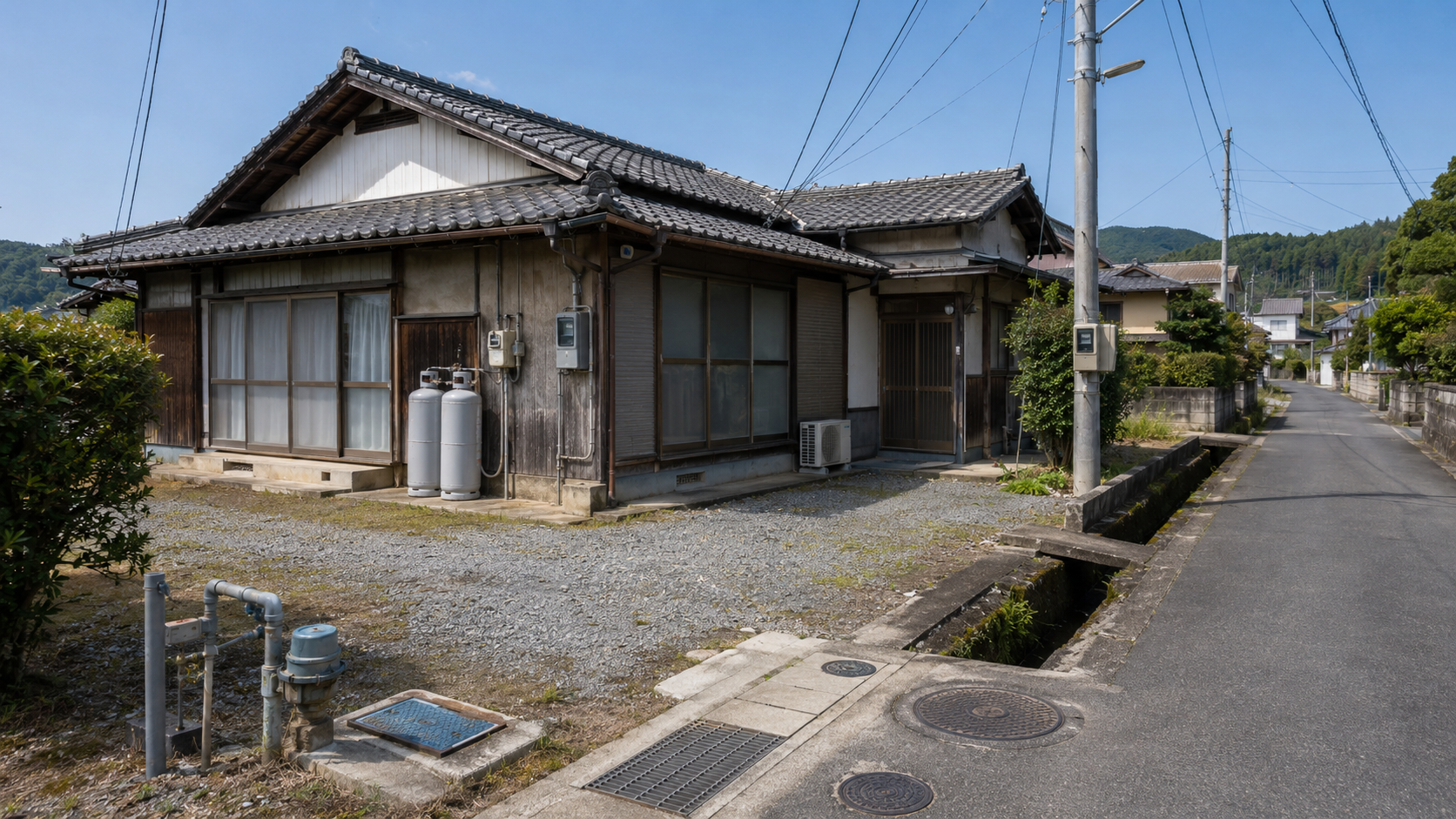
No matter how cheap an akiya appears, if there are problems with water supply, drainage, sewage, johkasou septic systems, electricity, gas, internet, road access, or parking, the real cost after purchase may become much higher than expected.
The true value of an akiya cannot be judged only by how the building looks. Whether it can be lived in, rented out, renovated, or reused as a business depends greatly on the condition of its infrastructure.
The Cheaper the Akiya, the More Important the Infrastructure Check
In rural Japan, some vacant houses are listed at very low prices. Some properties may look so affordable that buyers feel they should purchase them immediately.
However, the cheaper a property appears, the more carefully it should be checked before purchase. Even if the building price is low, infrastructure repairs or upgrades may require significant costs.
For example, the following problems may be found:
Old water pipes with leaks.
Water service disconnected for many years.
Use of well water requiring quality inspection.
No connection to public sewage.
Unknown condition of the johkasou septic system.
Blocked drainage pipes.
Insufficient electrical capacity for modern living.
Old wiring with fire risk.
No city gas connection.
Need for a propane gas contract.
Weak or unavailable internet connection.
Narrow road access preventing construction vehicles from entering.
Possible lack of legal road access under building regulations.
No parking space for daily life or business use.
These issues are difficult to understand from exterior photos or online real estate listings. If discovered after purchase, they may completely change the renovation plan.
Water Supply: It Is Not Enough to Check Whether Water Comes Out
When inspecting a vacant house, some people only check whether water comes out of the tap. However, this alone is not enough.
It is important to confirm not only whether water is available, but also whether the pipes are safe, whether there are leaks, whether the water pressure is sufficient, and whether pipes that have not been used for a long time have problems.
In older akiya, iron pipes or outdated plumbing materials may still be used. If the house has been unused for many years, rust and dirt may have built up inside the pipes. After water service is restored, problems such as rusty water, strange odors, low water pressure, or leaks under the floor may be discovered.
Important points to check include:
Is there a water meter?
Can the water contract be restarted?
Does clean water come from the taps?
Is the water pressure sufficient?
Are there leaks under the floor or inside the walls?
Can the water heater be used?
Do the water pipes need replacement?
Is the property in an area where pipes may freeze in winter?
If using well water, is water quality testing necessary?
Water is the foundation of daily life. If the water system is in poor condition, renovation costs for the kitchen, bathroom, toilet, and washroom may rise significantly.
Sewage, Drainage, and Johkasou Septic Systems
One of the most easily overlooked issues in vacant houses is drainage and sewage. Even if clean water is available, the house cannot be used comfortably if wastewater does not flow properly.
Depending on the region in Japan, some homes are connected to public sewage systems, while others use johkasou septic systems. In older houses, drainage pipes may also be deteriorated or blocked.
Important points to check include:
Is the house connected to public sewage?
Does it use a johkasou system?
What type and condition is the johkasou?
Are there maintenance and cleaning records?
Are the drainage pipes blocked?
Do the kitchen, bathroom, washroom, and toilet drain properly?
Is there any bad odor?
Are rainwater and household wastewater properly separated?
Does water collect easily on the land?
If the property uses a johkasou system, regular maintenance, cleaning, and inspections may be required. If the condition is not checked before purchase, repair, replacement, or ongoing management costs may appear later.
If drainage pipes are old, it may be necessary to open walls or floors for repair. This can become more expensive than simple interior renovation.
Checking the Type and Condition of the Toilet
Before buying an akiya, the toilet system should also be carefully checked. In urban areas, flush toilets are common, but in older rural houses, outdated toilet systems or toilets requiring major renovation may remain.
Important points include:
Is it a flush toilet?
Is it connected to public sewage?
Does it use a johkasou system?
Are the toilet floor and walls damaged?
Is there a strong odor?
Do the toilet fixture and pipes need replacement?
Is it easy to use for elderly people or guests?
Toilet renovation may involve more than replacing the toilet bowl. Pipes, flooring, walls, ventilation, electricity, water supply, and drainage may all be involved. Therefore, inspection before purchase is important.
Electricity: Is the Capacity Enough for Modern Life?
In old vacant houses, electricity may still be connected, but the capacity and safety may not be sufficient for modern living.
Older homes were not designed for multiple air conditioners, IH cooking systems, microwave ovens, washer-dryers, water heaters, Wi-Fi equipment, security cameras, or electric vehicle chargers. In many cases, distribution boards and wiring may need to be upgraded.
Important points to check include:
Can the electricity contract be restarted?
Is the distribution board too old?
Is the breaker capacity sufficient?
Is the wiring deteriorated?
Are there enough outlets?
Are grounded outlets available where needed?
Can multiple air conditioners be used?
Can the kitchen equipment be supported?
Can the house support future smart home upgrades?
Is there any risk of electrical leakage or fire?
Electrical systems are directly connected to safety. Using old wiring without inspection may increase the risk of fire or electrical problems. If the house will be seriously reused, professional inspection is necessary.
Gas: City Gas or Propane Gas?
Gas equipment is another important point to check. In Japan, some areas have city gas, while others use propane gas.
If city gas is not available, the owner will need to contract with a propane gas company. In old akiya, gas pipes, water heaters, stoves, and bath equipment may be outdated.
Important points include:
Is the property served by city gas or propane gas?
Can the gas contract be restarted?
Can the water heater be used?
Is there any risk of gas pipe deterioration or leakage?
Is the kitchen equipment safe?
Can the bath equipment be used?
Would an all-electric system be better?
If used as accommodation or a shop, does the equipment meet the required standards?
Old water heaters and gas equipment may create safety concerns. Before use, they should always be checked by a professional.
Internet Environment Strongly Affects Property Value
In recent years, more people want to use akiya for rural relocation, dual-location living, remote work, minpaku, guesthouses, or workation facilities. In these cases, internet access is extremely important.
No matter how beautiful the natural environment is or how attractive the building looks, if the internet is unstable, the property may not be suitable for work or accommodation.
Important points to check include:
Is fiber-optic internet available?
Can line installation work be done?
Is mobile phone signal available?
Is communication unstable in the mountains or rural areas?
Can Wi-Fi be installed easily?
Is the speed sufficient for remote work?
If used as accommodation, can multiple guests use the internet at the same time?
Internet access has become a major part of modern akiya value. If the target users are foreign guests, young migrants, or remote workers, checking communication quality is essential.
Road Access and Road Width
One of the most important issues when buying an akiya is road access. Even if a building appears to face a road, it is important to confirm whether the land legally connects to a road under building regulations.
If road access is problematic, it may affect future rebuilding, extension, major renovation, or resale. If the road is too narrow, construction vehicles, fire trucks, and ambulances may also have difficulty reaching the property.
Important points to check include:
Does the land legally connect to a road under building regulations?
Is the width of the road access sufficient?
Is the road public or private?
If it is a private road, are there rights for passage and excavation?
Can cars enter?
Can construction vehicles enter?
Can fire trucks and ambulances approach?
In snowy areas, is the road cleared in winter?
Are slopes or narrow roads a problem for daily life?
Road access problems are not always easy to solve after purchase. They should always be checked with a real estate agent, local government office, and specialist.
Parking Space Is Also Important
In many rural areas of Japan, a car is essential for daily life. Therefore, parking space is a very important factor.
Even if the house is cheap, daily life or business use may be difficult if there is no parking, cars cannot enter easily, there is no turning space, or the road is too narrow.
Parking is especially important if the property will be used for:
Rural relocation.
Family living.
Guesthouse accommodation.
Café or shop use.
Renovation work.
Housing for elderly people.
Workation facilities.
Before purchase, it is important to actually visit the property by car and check road width, parking space, and ease of entry and exit.
Renovation Costs Must Include Infrastructure, Not Only the Building
When people think about renovating an akiya, they often imagine interior design, roof repair, exterior walls, kitchen, bathroom, and toilet upgrades. However, infrastructure work can become a major part of the total cost.
Possible infrastructure costs include:
Water pipe replacement.
Drainage pipe replacement.
Johkasou repair or replacement.
Electrical wiring upgrades.
Distribution board replacement.
Water heater replacement.
Gas equipment upgrades.
Internet installation work.
Road and parking improvements.
Rainwater drainage improvement.
If these costs are not included in the budget before purchase, the total project cost may greatly exceed expectations.
Before buying an akiya, it is important to consider not only the cost of repairing the building, but also the cost of making it truly usable.
Special Notes for Foreign Buyers
Interest in Japanese akiya among foreign buyers is increasing. However, infrastructure issues are difficult to understand from photos or online information alone.
Sewage, johkasou systems, road access, private roads, electrical capacity, gas type, and internet availability may be especially difficult to understand for those unfamiliar with Japanese real estate.
Foreign buyers should pay attention to the following points:
Do not judge only by online photos.
Check water, electricity, and drainage on site.
Ask the real estate agent detailed questions about infrastructure.
If possible, visit with an architect or renovation contractor.
Confirm legal road access and rebuilding possibility.
Check the condition of sewage or johkasou systems.
Research internet availability in advance.
Confirm whether the infrastructure matches the future use plan.
Buying only because the price is low may lead to major unexpected costs later.
Conclusion: The Value of an Akiya Is Decided by Its Infrastructure
The appeal of an akiya is not determined only by its price or appearance. What truly matters is whether the house can be used safely, comfortably, and sustainably over the long term.
Water supply, drainage, sewage, johkasou, electricity, gas, internet, road access, and parking are not always visible at first glance. However, they form the foundation of daily life and business use.
No matter how attractive the building looks, serious infrastructure problems can make reuse difficult. On the other hand, even if the building is old, strong infrastructure can greatly increase the possibility of renovation and reuse.
Before buying an akiya, it is important to ask:
Can this house truly be lived in?
Are the water and drainage systems in good condition?
Are the electricity and gas systems safe?
Is internet available?
Are road access and parking practical?
Does the infrastructure match the future use plan?
Has the budget included infrastructure improvement costs?
An akiya can become an asset that creates new value for the community when properly inspected and improved. However, if infrastructure checks are ignored, a property that looked cheap may become a major burden.
The future of an akiya is decided not only by visible design, but also by the invisible infrastructure behind it.