
Unexpected Valuable Items Found in Akiya Across Japan
Japan is facing a growing vacant home problem.
When people hear the word “Akiya” (vacant house), they often imagine an old, deteriorating building that requires demolition or extensive renovation.
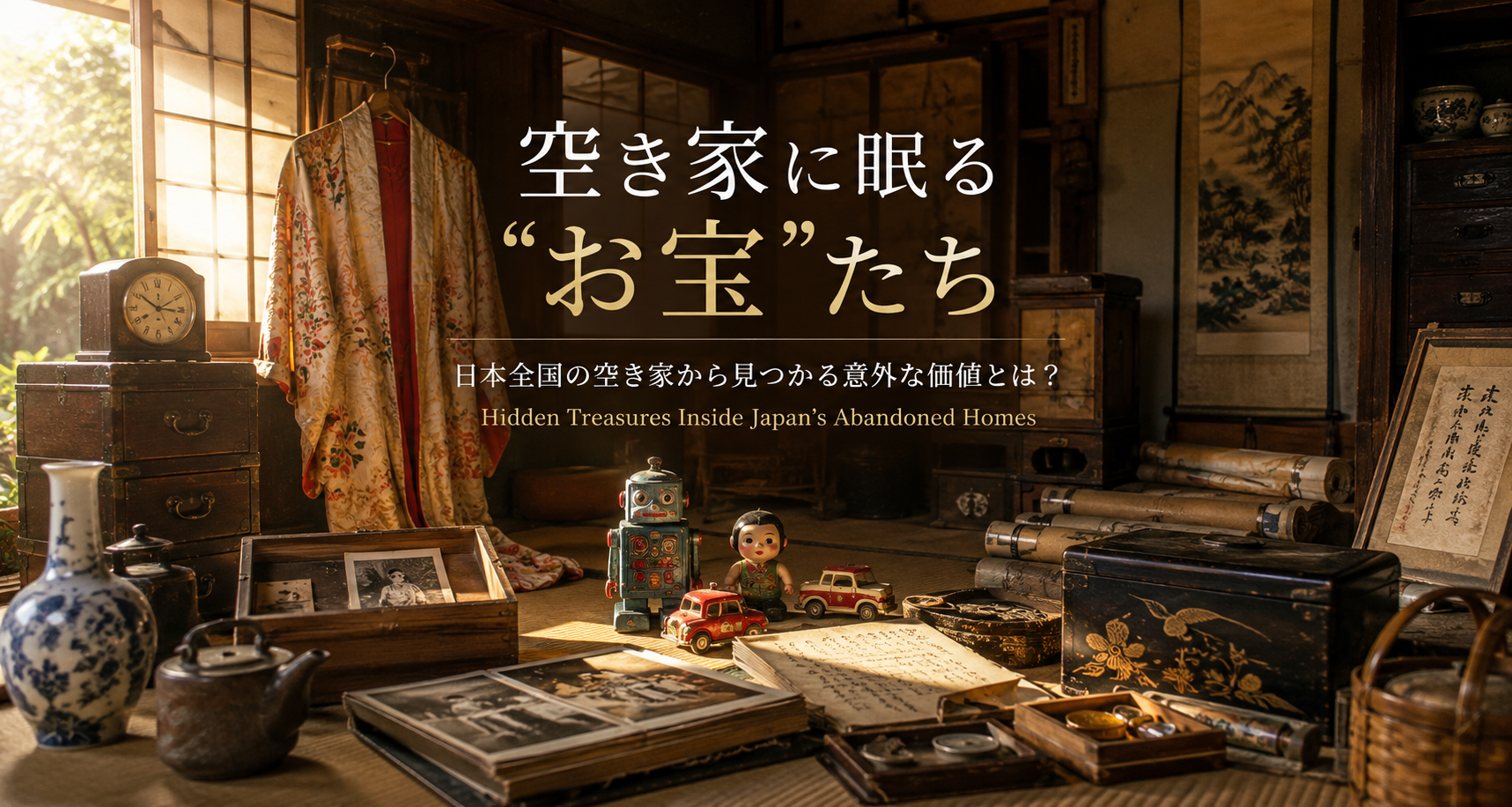
However, many abandoned houses contain something unexpected: hidden treasures.
Across Japan, vacant homes often preserve valuable items that have remained untouched for decades. In some cases, even the heirs of the property are unaware of what remains inside.
Today, investors, collectors, historians, and renovation enthusiasts are increasingly interested not only in the buildings themselves but also in the unique items hidden within them.
Why Valuable Items Remain Inside
There are several reasons why valuable belongings are often left behind.
Japan’s aging population has resulted in many properties being inherited by family members who live far away. As a result, houses may remain untouched for years.
In addition, clearing out a property can be expensive and time-consuming. Many families postpone the task, leaving furniture, personal belongings, and sometimes highly valuable collectibles behind.
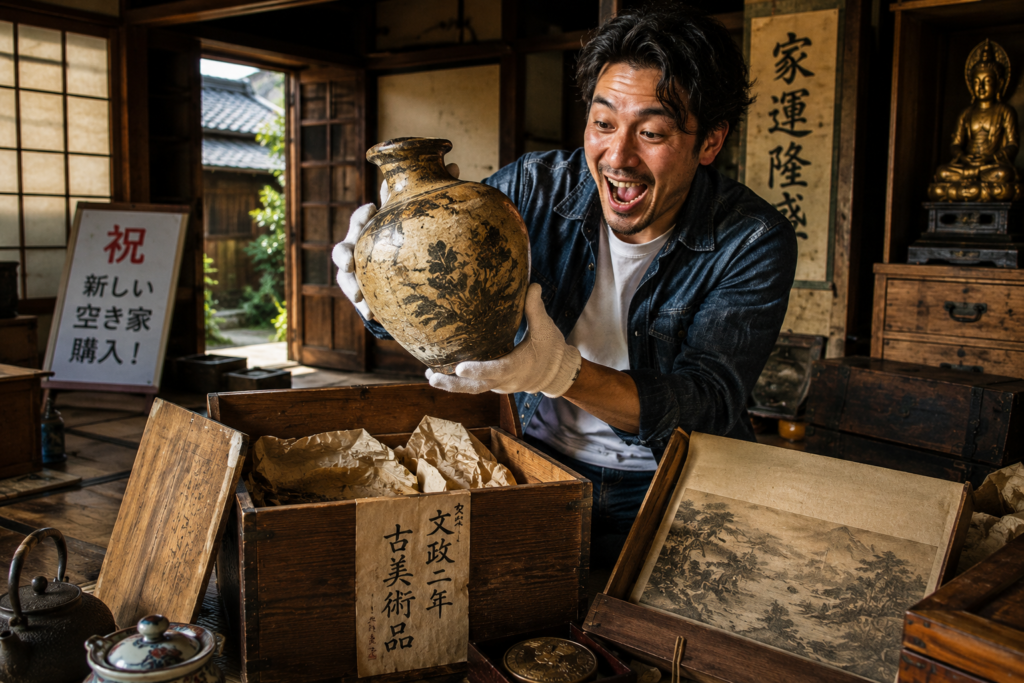
Common Treasures Found in Akiya
1. Vintage Kimono
Traditional silk kimono from the Taisho and Showa eras are frequently discovered in old wardrobes.
Certain handmade kimono can be highly valuable, especially those from famous textile-producing regions.
2. Antiques and Artworks
Scroll paintings, tea ceremony tools, ceramics, lacquerware, and traditional crafts are often found inside older homes.
Some pieces may appear ordinary but can be worth significant amounts after professional appraisal.
3. Rare Coins and Commemorative Currency
Old coin collections, wartime currency, and commemorative coins are occasionally discovered in drawers and storage rooms.
Collectors around the world actively seek certain rare Japanese coins.
4. Historical Photographs and Letters
Beyond financial value, many vacant homes contain documents that provide insight into local history and family heritage.
These materials can become valuable resources for researchers and museums.
5. Showa-Era Retro Collectibles
Vintage toys, advertising signs, electronics, magazines, and household items from the Showa period have become increasingly popular among collectors.
Demand for authentic Japanese retro products continues to grow both domestically and internationally.
Why Foreign Investors Are Interested
Japanese craftsmanship has earned global respect.
Traditional products, vintage collectibles, and cultural artifacts often command premium prices in overseas markets.
For some foreign buyers, the contents of an abandoned house can be as interesting as the property itself.
The possibility of discovering unique historical items adds another layer of attraction to Japan’s Akiya market.
Important Considerations
Not everything found inside a vacant home has value.
Condition, authenticity, and legal ownership all play critical roles.
Potential buyers should ensure that ownership rights have been properly transferred before disposing of or selling any belongings.
Professional appraisers and legal advisors can help avoid costly mistakes.
Akiya: More Than Just Empty Houses
Japan’s vacant homes are often viewed as a social and economic challenge.
Yet behind many old doors lies a forgotten story.
A kimono folded away decades ago.
A family photo album untouched for years.
A handmade ceramic bowl created by a local artisan.
These items are more than objects; they are pieces of Japan’s cultural heritage.
Perhaps the next time we look at an abandoned house, we should not only see an empty building but also the hidden stories and treasures waiting to be rediscovered.
At Anihon Akiya Japan, we continue to explore the opportunities, challenges, and untold stories surrounding Japan’s vacant homes.