

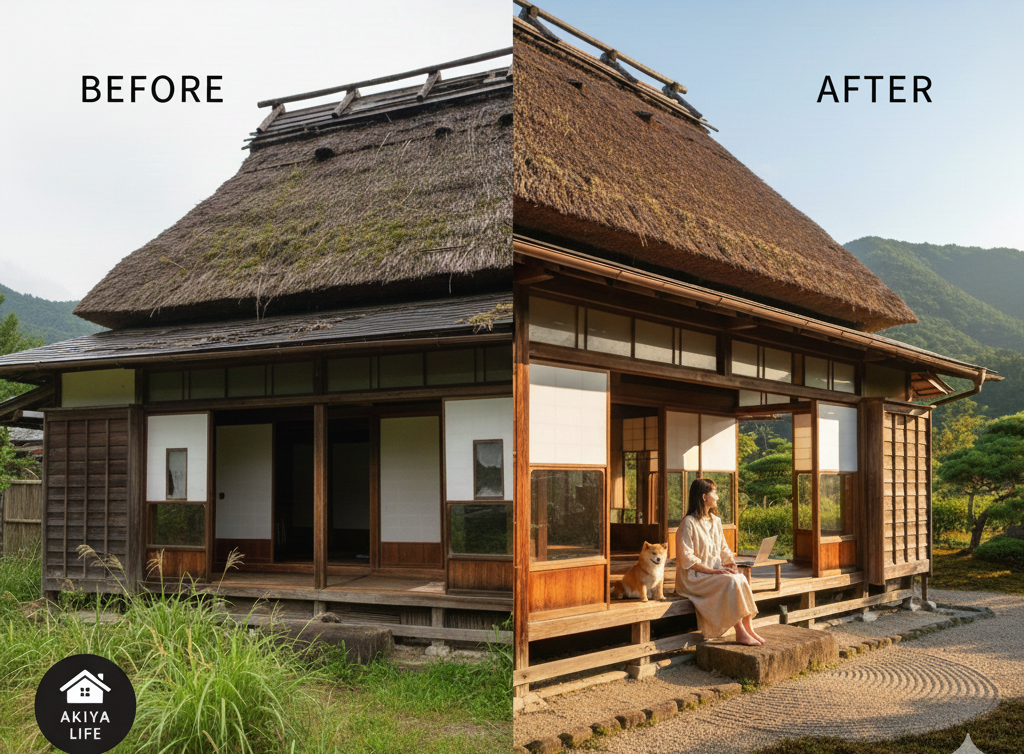
The “Akiya” (vacant house) problem is reshaping the Japanese rural landscape. But did you know that this social issue is currently transforming into a “treasure trove” for young people?
In the past, traditional rural houses, known as Kominka, were symbols of a “slow life” reserved for post-retirement. However, with the digitalization of society and the widespread adoption of remote work, the digital-native generations (people in their 20s and 30s) are becoming the new protagonists of this scene. In this article, we dive deep into why young people are aiming for abandoned homes in the countryside and whether this is a sustainable trend.
1. Why “Akiya” Now?
It is said that there are currently over 8.5 million vacant houses in Japan. Three key factors have turned this situation around:
- The Normalization of Remote Work: The necessity to live in Tokyo or Osaka has diminished. Working styles like “going to the office once a week and spending the rest in the mountains of Nagano” have become a reality.
- Unbeatable Value for Money: You can sometimes acquire a spacious traditional house with a garden for less than the monthly rent of a studio apartment in the city center. On “Akiya Banks” (municipal databases for vacant homes), it is not rare to find properties transferred for 0 Yen or around 500,000 Yen ($3,000 – $4,000 USD).
- DIY and the Pursuit of “Self”: Rather than buying a cookie-cutter ready-made house, an increasing number of creative young people want to renovate with their own hands and build their ideal living space.
2. The Benefits of Akiya Regeneration
For young people, moving into a rural empty house means more than just “relocating.”
- Financial Freedom: By drastically reducing housing costs, money can be redirected toward hobbies, investments, or even starting a new business.
- Connection with Community: Unlike the often superficial relationships in the city, the countryside offers deep connections with local society. Many young people find a new sense of belonging by participating in local festivals or agricultural activities.
- Coexistence with Nature: Liberation from packed commuter trains and living in tune with the four seasons provides a significant boost to mental health.
3. It’s Not a “Paradise”: Facing the Reality
However, deciding to move based solely on a dream can lead to failure. We cannot ignore the hurdles young people face:
- Soaring Renovation Costs: Even if the property itself is cheap (or free), fixing plumbing, insulation, or earthquake reinforcement can easily cost millions of yen.
- The “Outsider” Wall: In traditional villages, local rules and human relationships are dense. You must make an effort to integrate, from strict garbage disposal rules to joining the local volunteer fire brigade.
- Infrastructure Issues: There are still areas where high-speed internet is not established, or where hospitals and supermarkets are far away.
4. Conclusion: Is the Youth Return to Rural Areas Possible?
To conclude: Yes, it is possible, and it has already begun.
However, this doesn’t strictly mean “full migration.” The latest trend is “Dual-Location Living” (Dual Life). Working in the city during the week and spending weekends at a rural Akiya, or living there on a trial basis for a few months. More young people are engaging with the countryside while dispersing their risks in this way.
Local municipalities have also started offering renovation subsidies and entrepreneurship grants to attract younger demographics. The “Akiya” is no longer a ruin; it is a canvas for unleashing the creativity of the youth.
If you are feeling suffocated by the confinement of the city, why not search the “AnihonAkiyaJapan” just once? A door to your new life might be waiting for you there.